
Domain-specific AI, engineered end to end
Six solution areas covering the full stack — from silicon architecture to deployed systems. Each is built around a real-world constraint, not a general-purpose benchmark.

On-sensor AI Chip Solutions
AI processing directly at the sensor, enabling ultra-low cost and energy-efficient intelligence at the data source.
- Inference at the point of capture — no round trip to the cloud
- Optimized for power, cost, and footprint constraints
- Suited for always-on vision and sensing applications

Flexible Multi-chip AI Solutions
Modular and scalable AI systems combining multiple chips, optimized for domain-specific performance and flexible deployment.
- Scales from single-board edge devices to multi-chip systems
- Architecture tuned per domain workload
- ASIC / FPGA / system-level co-design

Bio-AI Co-design Services
Integrated AI and hardware co-design for biological data analysis, accelerating discovery through multimodal data and lab automation.
- Domain-specific models for biological and genomic data
- Multimodal analysis pipelines with lab automation
- Top-performer team at the CAGI7 genome interpretation challenge

Domain-Specific Small Language Models
Compact language models tuned for one domain with supervised fine-tuning and grounded with retrieval — private translation and document intelligence that runs on-premise or on-device.
- Fine-tuned for the vocabulary, format, and rules of your domain, not the open internet
- Retrieval keeps answers grounded in your current documents, with sources attached
- Small enough to run where the data lives: on-premise, on a workstation, or on edge silicon

Physical AI
Collaborative R&D with commercial robotics and humanoid teams in Korea and China — low-power perception for machines that sense and act in the real world.
- A robot is a battery-powered embedded platform; perception must fit a strict power budget
- Near-sensor vision cuts the latency and bandwidth between camera and control loop
- MOU signed with Everybot (Korea, Jul 2026); discussions opening with robot builders in China
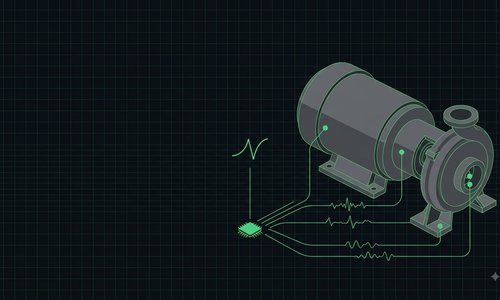
Industrial Sensing & PHM
Near-sensor processing of vibration, acoustic, temperature, and electrical signals for prognostics and health management — machines that report their own condition.
- Always-on anomaly detection at the sensor, inside a milliwatt power budget
- Events and health indices leave the machine, not raw high-rate waveforms
- Prognostics: estimate remaining useful life, not just detect the fault after it happens
Applied AI solutions in the field
We are already delivering AI solutions such as EV recognition, smart farming, and custom AI modules — detailed solution pages are on the way.